Gear Guides
The Nifty Fifty: Why a 50mm Lens Is Great for Beginners
Discover why a 50mm prime lens is the best first lens upgrade for beginners: sharp images, fast aperture, low cost, and real creative control.
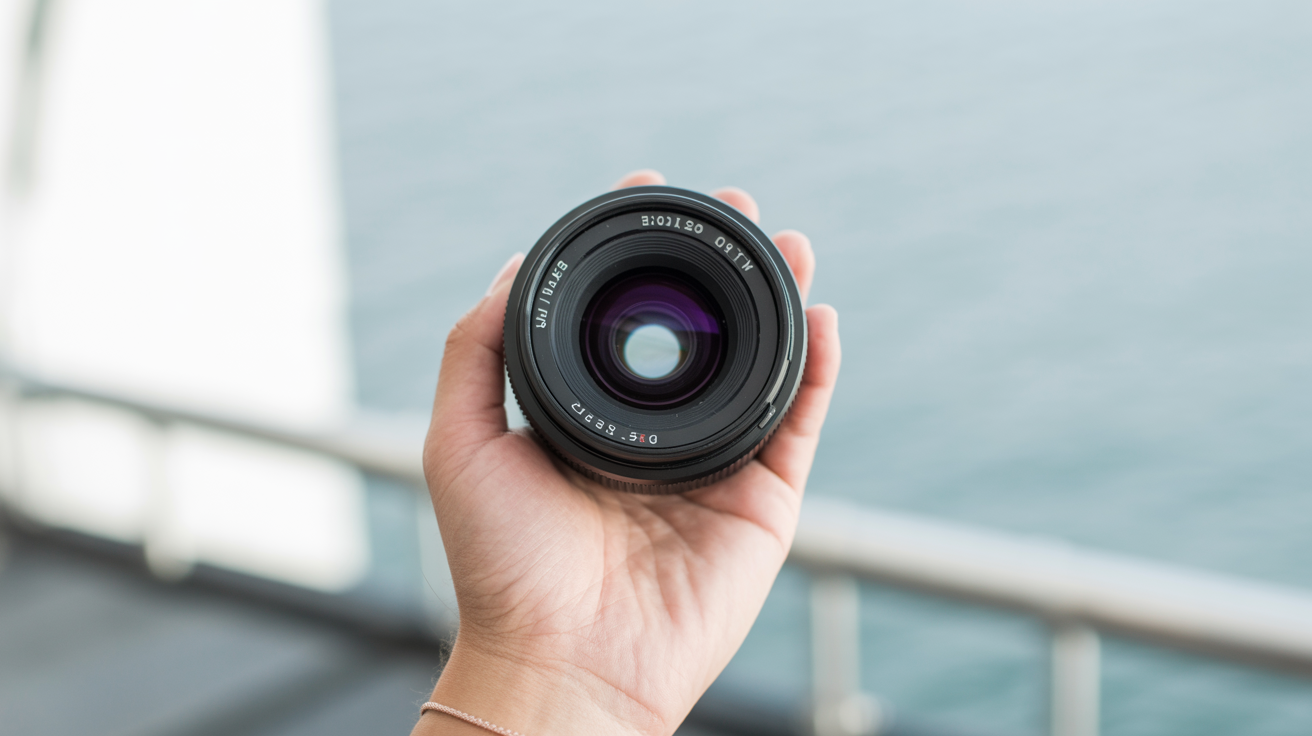
If you've just bought your first camera and started poking around photography forums, you've probably seen the phrase "nifty fifty" thrown around constantly. There's a reason every experienced photographer seems to own one. A 50mm prime lens is cheap, sharp, versatile, and genuinely teaches you to shoot better. This guide breaks down exactly what it is, why it works so well for beginners, and what to expect when you put one on your camera.
What Is a Prime Lens, and Why Does It Matter?
A prime lens has a fixed focal length, meaning it does not zoom. You get one angle of view, full stop. That might sound like a limitation, but it is actually a feature for learning.
When you cannot twist a zoom ring, you have to physically move yourself to frame a shot. This practice, sometimes called "zooming with your feet," builds a muscle memory for composition that zoom lenses let you skip. You start thinking about where to stand, how close to get, and what to include or exclude from the frame. That thinking is at the heart of good photography, and a fixed lens forces you to do it.
A 50mm focal length is special because it approximates the angle of view of the human eye on a full-frame camera. Scenes look natural and unexaggerated. Wide-angle lenses stretch perspective; telephoto lenses compress it. At 50mm, what you see through the viewfinder looks roughly like what your eyes see, which makes it easier to visualize a shot before you raise the camera.
If you are curious about how prime lenses compare to zoom lenses in more depth, the guide on Camera Lenses Explained: Prime vs Zoom covers that ground well.
The Case for f/1.8: Low Light and Background Blur
The aperture of a lens controls how much light enters the camera. It is expressed as an f-number, and here is the counterintuitive part: a lower number means a wider opening. Most kit lenses (the zoom lens bundled with a new camera) open up to around f/3.5 or f/5.6. A typical 50mm prime opens all the way to f/1.8. That is a dramatic difference.
A wider aperture lets in far more light, which means two practical things for a beginner:
First, you can shoot in dim conditions without cranking your ISO (the camera's sensitivity setting) so high that photos turn grainy. Indoor family gatherings, restaurants, evening light on a porch, a dark concert hall. Situations where a kit lens forces you to use flash or accept blurry, noisy results become manageable with an f/1.8 lens.
Second, a wide aperture produces a shallow depth of field. In plain terms, this means the subject stays sharp while the background blurs into a soft wash of color. Photographers call this "bokeh" (from a Japanese word). It separates subjects from cluttered backgrounds and gives photos that professional, polished look. A 50mm at f/1.8 does this without any editing or filters.
Full-Frame vs APS-C: Understanding Crop Factor
Here is something that trips up almost every beginner: a 50mm lens does not behave the same way on every camera body.
Camera sensors come in different sizes. A full-frame sensor is the same size as a 35mm film frame. Many entry-level and mid-range cameras use a smaller sensor called APS-C (sometimes called a crop sensor). Because the APS-C sensor captures a narrower slice of the image projected by the lens, the effective field of view changes.
Most APS-C cameras have a crop factor of around 1.5x (Nikon, Sony, Fujifilm) or 1.6x (Canon). Multiply the lens focal length by that number and you get the full-frame equivalent angle of view. So a 50mm lens on an APS-C body behaves more like a 75mm to 80mm lens on a full-frame body.
That tighter framing makes it excellent for portraits, because the slightly longer equivalent focal length flatters faces and gives you a bit of working distance between yourself and the subject. It is less ideal if you wanted that "natural eye" angle of view. For that on an APS-C camera, a 35mm prime is the closer match. Still, a 50mm on crop remains a wonderfully useful lens, just framed a little tighter than the classic "normal" perspective.
If you are still sorting out which camera body to buy and whether sensor size matters for your budget, the post on How to Choose Your First Camera is a good starting point.
What the Nifty Fifty Is Great For
The 50mm prime is a surprisingly broad tool. Here is where it performs best:
- Portraits: The focal length and wide aperture combination is flattering. Faces look natural, backgrounds blur, and you do not have to stand so far away from your subject that the moment feels staged.
- Food photography: Shooting down onto a plate from a foot or two away? A 50mm frames a meal beautifully and the f/1.8 aperture pulls the fork or garnish into focus while softening the table.
- Street and documentary photography: It is small, light, and unobtrusive. The natural field of view means you are not distorting scenes or compressing crowds.
- Low-light and available-light shooting: Indoor gatherings, candles on a dinner table, window light in the afternoon. Situations where flash would kill the mood.
- Everyday shooting: It is versatile enough to be a "leave it on" lens. Many photographers own expensive zoom lenses and still reach for the 50mm as their default.
Why the Price Makes It a No-Brainer
This is the part that surprises people new to photography. A name-brand 50mm f/1.8 prime costs somewhere between 100 and 250 dollars depending on the camera system. That is less than most kit zoom lenses, far less than a 24-70mm f/2.8 zoom, and in some cases less than a single dinner out.
The low price comes from the simple optical design. A 50mm prime has fewer glass elements than a zoom, the manufacturing tolerances are well-understood after decades of production, and the design has been refined so many times that optical quality is genuinely excellent even in the budget versions.
For a beginner upgrading from the kit lens, the jump in image quality per dollar spent is as good as it gets in photography gear. You will immediately notice sharper corners, less distortion, and cleaner performance in low light. And because the lens is so inexpensive, the learning-by-doing approach works: you can put it on the camera every day, make mistakes, and figure out how aperture affects images without worrying about protecting a four-figure investment.
If you are still deciding between a DSLR and a mirrorless body before you buy your first prime, the breakdown in DSLR vs Mirrorless: Which Should a Beginner Buy? covers how the choice affects lens compatibility.
Building Good Habits with a Fixed Lens
The limitation is the lesson. Spending a few months shooting exclusively with a 50mm prime is a classic exercise in photography education for good reason. When the zoom is removed as a tool, you solve framing problems with your body and your eye. You walk closer, you back up, you crouch, you find a different angle. Every one of those decisions trains your compositional instincts.
It also simplifies the decision-making process at the moment of shooting. With one focal length, one fast aperture, and one straightforward lens to understand, you can put your mental energy into light, timing, and expression rather than gear settings. That is where the real pictures come from.
Frequently Asked Questions
Is a 50mm lens good for a beginner on a crop-sensor camera?
Yes, with the understanding that it behaves like a 75-80mm equivalent lens rather than a true 50mm. That tighter framing makes it excellent for portraits and food photography. If you specifically want the classic "natural eye" field of view on an APS-C camera, a 35mm prime would match it more closely. But a 50mm on crop is still an outstanding first prime lens, sharp and fast and inexpensive.
Do I need image stabilization in a 50mm lens?
Not necessarily. Because f/1.8 lets in so much light, you can use faster shutter speeds than you would with a kit lens, which reduces motion blur from camera shake. Most photographers hand-hold a 50mm comfortably in normal conditions. If you shoot primarily video or in very low light, stabilization helps, but for stills it is rarely a dealbreaker.
Can I use a 50mm lens for landscapes?
You can, but it is not the most popular choice. Landscape photographers often prefer wider focal lengths (14mm to 35mm) to capture sweeping scenes in a single frame. A 50mm crops out more of that breadth. That said, it works well for tighter landscape details: a single tree, a rock formation, a detail within a wider scene. It is not the tool you would grab first for a big panoramic view.
Which 50mm lens should I buy?
The answer depends on your camera brand. Every major camera manufacturer makes its own version: Canon EF 50mm f/1.8 STM, Nikon AF-S NIKKOR 50mm f/1.8G, Sony FE 50mm f/1.8, and so on. These first-party options are all solid and affordable. Third-party makers like Sigma and Yongnuo also produce well-regarded alternatives at lower prices. Stick to your camera's native mount and you will not go wrong.
When should I consider moving past the 50mm?
The 50mm is a long-term lens, not just a starter lens. Many photographers keep one on their camera for years. That said, once you have a feel for your own shooting style, you might find yourself consistently wanting more reach (a portrait telephoto like an 85mm) or more width (a 24mm or 35mm for interiors and street). The 50mm teaches you which direction your instincts pull, which makes the next lens purchase a much easier decision.