Gear Guides
Camera Lenses Explained: Prime vs Zoom
Prime vs zoom lens: what the numbers mean, which is sharper, which is cheaper, and the best beginner kit lens combination.
Your camera body is just a light-tight box. The lens is what actually shapes your image, and choosing the right one matters far more than most beginners expect. This guide breaks down the two main types of camera lenses so you can make a confident, informed decision without getting lost in spec sheets.
At a Glance
- A prime lens has one fixed focal length. A zoom lens covers a range of focal lengths.
- Primes are typically sharper, faster (wider maximum aperture), lighter, and cheaper than a zoom covering the same focal length.
- Zooms trade some of that optical edge for the ability to reframe instantly, which matters when you cannot move closer or the moment will not wait.
- Kit zooms (18-55mm or 18-135mm) usually have variable maximum apertures like f/3.5-5.6; constant-aperture zooms (f/2.8) fix that but cost far more.
- A practical starter kit: your kit zoom plus a 50mm f/1.8 prime, which typically costs 100 to 200 dollars and covers most of what a beginner needs to learn fast glass.
- Always confirm your lens mount matches your camera body before buying; mounts are not interchangeable across brands without an adapter.
What the Numbers on a Lens Actually Mean
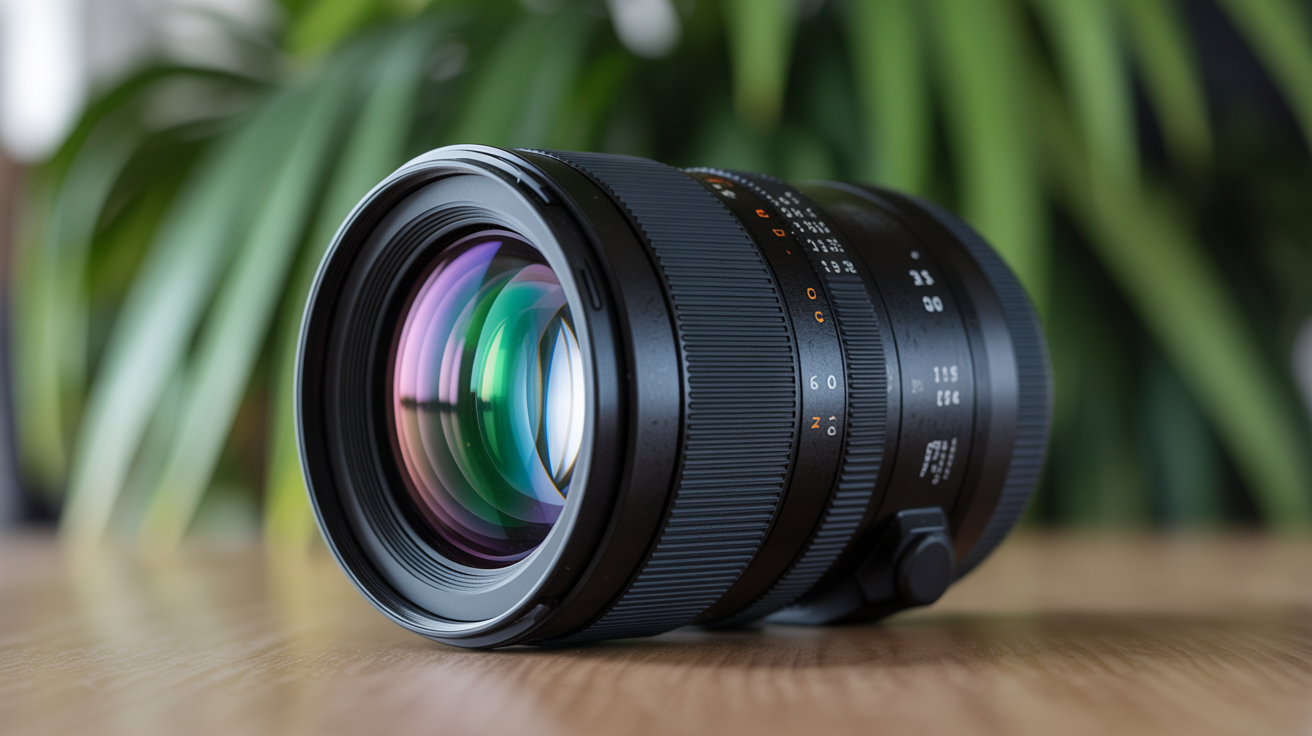
Every lens has at least two numbers printed on it. Understanding those two numbers makes shopping much less confusing.
Focal length is the first number, measured in millimeters (mm). It describes the lens's angle of view: how wide or tight the frame is. A smaller number means a wider view; a larger number means a narrower, more magnified view.
Here is a quick cheat sheet:
| Focal length | Common name | What it's good for |
|---|---|---|
| 10-24mm | Ultra-wide | Landscapes, architecture, interiors |
| 24-35mm | Wide | Street photography, environmental portraits |
| 35-70mm | Standard | Everyday shooting, travel, family |
| 85-135mm | Short telephoto | Portraits, detail shots |
| 200mm+ | Telephoto | Wildlife, sports, distant subjects |
The 50mm focal length is special: on a full-frame sensor it approximates human-eye perspective, which is why it feels natural. (There is a whole guide on that: The Nifty Fifty: Why a 50mm Lens Is Great for Beginners.)
One wrinkle worth knowing before you shop: the focal length printed on a lens does not always translate to the same field of view on every camera. Sensors smaller than full frame (APS-C, commonly called crop-sensor) magnify the effective angle of view by a factor, usually around 1.5x for most brands and 1.6x for Canon's crop bodies. A 50mm lens on a 1.5x crop body frames roughly like a 75mm lens would on a full-frame body. That is worth checking before you buy a lens based on a full-frame recommendation you read somewhere else. The cheat sheet above uses full-frame focal lengths as the reference point; adjust upward if you are shooting crop sensor.
Maximum aperture is the second number, written as f/2.8 or f/1.8. Aperture is the opening inside the lens that lets light through. A lower f-number means a wider opening. Wider openings let in more light, which helps in dim conditions and produces that blurry background effect (called bokeh) that portrait photographers love. A lens with a maximum aperture of f/1.8 or f/2.8 is called a "fast lens" because it lets you use faster shutter speeds in low light.
When a zoom lens shows two aperture numbers, like f/3.5-5.6, it means the maximum aperture changes as you zoom. At the wide end you get f/3.5; at the telephoto end you only get f/5.6. That is a limitation to understand before buying.
Prime Lenses: Fixed Focal Length, Big Advantages
A prime lens has one focal length and one focal length only, a fixed relationship between the lens elements rather than a moving zoom mechanism, with a maximum aperture that commonly runs from about f/1.2 to f/2.8 depending on the model, per the standard technical definition. A 50mm prime is always 50mm. You cannot zoom with it. To change your framing, you move your feet.
That constraint sounds annoying. In practice it pushes you to think harder about composition, and the optical payoff is real.
Because lens designers only need to optimize for one focal length, prime lenses tend to be:
- Sharper across the frame. Fewer moving elements means fewer places for optical compromises.
- Faster (wider maximum aperture). A 50mm f/1.8 prime is common and inexpensive. A 50mm f/1.8 zoom does not exist.
- More affordable. A 50mm f/1.8 from any major brand costs roughly $100-200 new. A zoom covering the same range and matching the image quality costs several times more.
- Smaller and lighter. Primes travel well.
The tradeoff is versatility. Shooting a wedding where you need wide group shots and tight detail shots in quick succession? Swapping primes mid-ceremony is clumsy. That is where zooms earn their place.
Zoom Lenses: One Lens, Many Focal Lengths
A zoom lens covers a range of focal lengths that can be varied continuously, rather than a single fixed one, and is typically described by its zoom ratio, the span between its widest and longest focal length. A 24-70mm zoom is roughly a 3x zoom; some professional video lenses reach far higher ratios, though at the cost of size and aperture speed at the long end, as the general engineering tradeoffs describe. The number after the dash is how far it zooms.
The versatility is genuinely useful, especially when:
- You cannot move closer (wildlife, sports, events)
- The situation changes fast and you need to reframe quickly
- You want to travel with fewer lenses
Kit lenses, the lenses bundled with most entry-level cameras, are usually zooms in the 18-55mm or 18-135mm range. They are designed to cover common shooting situations so beginners can start shooting right away. The tradeoff is that they often have smaller maximum apertures (f/3.5-5.6) and slightly less sharpness at the corners than a dedicated prime at the same focal length.
Higher-end zooms, like a 24-70mm f/2.8, solve the aperture problem. They maintain a constant f/2.8 across the whole zoom range. The cost? These lenses are heavy, large, and expensive. A professional-grade 24-70mm f/2.8 typically runs $1,500-2,500 new. Constant-aperture designs like this are generally limited to more modest zoom ratios, around 3x, because holding a wide aperture across a huge focal-length range gets optically and physically difficult, which is part of why superzoom lenses (18-300mm and similar) almost always have variable, narrower apertures.
Prime vs Zoom: The Side-by-Side
| Factor | Prime lens | Zoom lens |
|---|---|---|
| Focal length | Fixed (one view) | Variable (range of views) |
| Maximum aperture | Usually wider (f/1.4-f/2) | Usually narrower (f/2.8-f/5.6) |
| Low-light performance | Better | Worse at entry level |
| Bokeh (background blur) | Easier to achieve | Harder at typical kit apertures |
| Sharpness | Generally excellent | Good to excellent (varies by price) |
| Size and weight | Compact | Larger, especially fast zooms |
| Price at equivalent aperture | Lower | Higher |
| Versatility | Low | High |
| Good for learning composition | Yes (forces intentional framing) | Less so |
Neither type is objectively better. The right choice depends on what you shoot and how you shoot it.
What Beginners Should Actually Buy
Here is practical advice rather than a fence-sitting "it depends."
Start with the kit zoom. If your camera came with an 18-55mm or similar, use it for several months. Learn what focal lengths you actually reach for. Do you always zoom to the longest end? You might want a telephoto zoom. Do you constantly want to go wider? Add an ultra-wide later. A simple way to track this: note the focal length of your ten favorite shots from the first month. If seven of them cluster near 50mm, a 50mm prime is an obvious next purchase.
Add a 50mm prime next. Once you have shot for a while, a 50mm (or 35mm if you shoot on a crop-sensor body and want a more standard angle of view) prime will immediately show you what a fast lens feels like. The low-light performance and background blur at f/1.8 will feel like a revelation if you have only used a kit zoom. The price is low enough that this is a low-risk experiment.
This two-lens kit, kit zoom plus a 50mm prime, covers an enormous range of shooting situations and costs far less than a single high-end zoom.
Before you shop for lenses, make sure your lens mounts match your camera body. Canon EF lenses do not fit Sony bodies. Nikon Z lenses do not fit Nikon F bodies without an adapter. The guide on how to choose your first camera covers mount systems in more detail, and if you are still deciding between camera types, DSLR vs Mirrorless: Which Should a Beginner Buy? is worth reading before you commit to a system.
Frequently Asked Questions
Is a prime lens better than a zoom for portraits?
For most beginners, yes. A prime in the 50-85mm range with a wide aperture (f/1.8 or f/2) gives you pleasing background separation and flattering perspective without spending a lot of money. You can achieve similar results with a fast zoom, but at a much higher price.
Can a zoom lens be as sharp as a prime?
At the high end, yes. Professional-grade constant-aperture zooms from Tamron, Sigma, Sony, Canon, and Nikon can match or approach prime sharpness. Entry-level kit zooms generally cannot. At equivalent price points, a prime will usually be sharper.
What does "constant aperture" mean on a zoom lens?
It means the maximum aperture stays the same throughout the zoom range. A 70-200mm f/2.8 constant-aperture zoom is always f/2.8 whether you are at 70mm or 200mm. Variable-aperture zooms (like f/3.5-5.6) lose light as you zoom in, which can cause your camera to slow the shutter speed or raise ISO without warning.
Do I need a new lens if I switch from a DSLR to a mirrorless camera?
Often yes, unless your new mirrorless body uses the same mount as your old DSLR, or you use an adapter. Canon RF and Nikon Z mirrorless bodies have different mounts than their EF and F DSLR predecessors. Adapters let you use older lenses, but autofocus speed may differ. Check compatibility before switching systems.
What is the best first lens for street photography?
A 35mm prime on a crop-sensor body (which gives roughly a 50mm full-frame equivalent field of view) or a 28mm prime on a full-frame body. Both focal lengths keep you close to your subject without being obtrusive, and both are available in fast, affordable versions from most brands.
How much should a beginner expect to spend on their first two lenses?
A kit zoom usually comes bundled with the camera body at little or no extra cost. Adding a 50mm f/1.8 prime typically runs 100 to 200 dollars new, and third-party brands sometimes undercut that further. For well under 300 dollars total beyond the camera itself, that combination covers everyday shooting, low light, and portraits, which is enough range to learn on for a year or more before you have a clear sense of what a third lens should be.