Composition
Negative Space in Photography Explained
Learn how negative space photography works, where to find clean backgrounds, and how empty areas make your subject stand out.
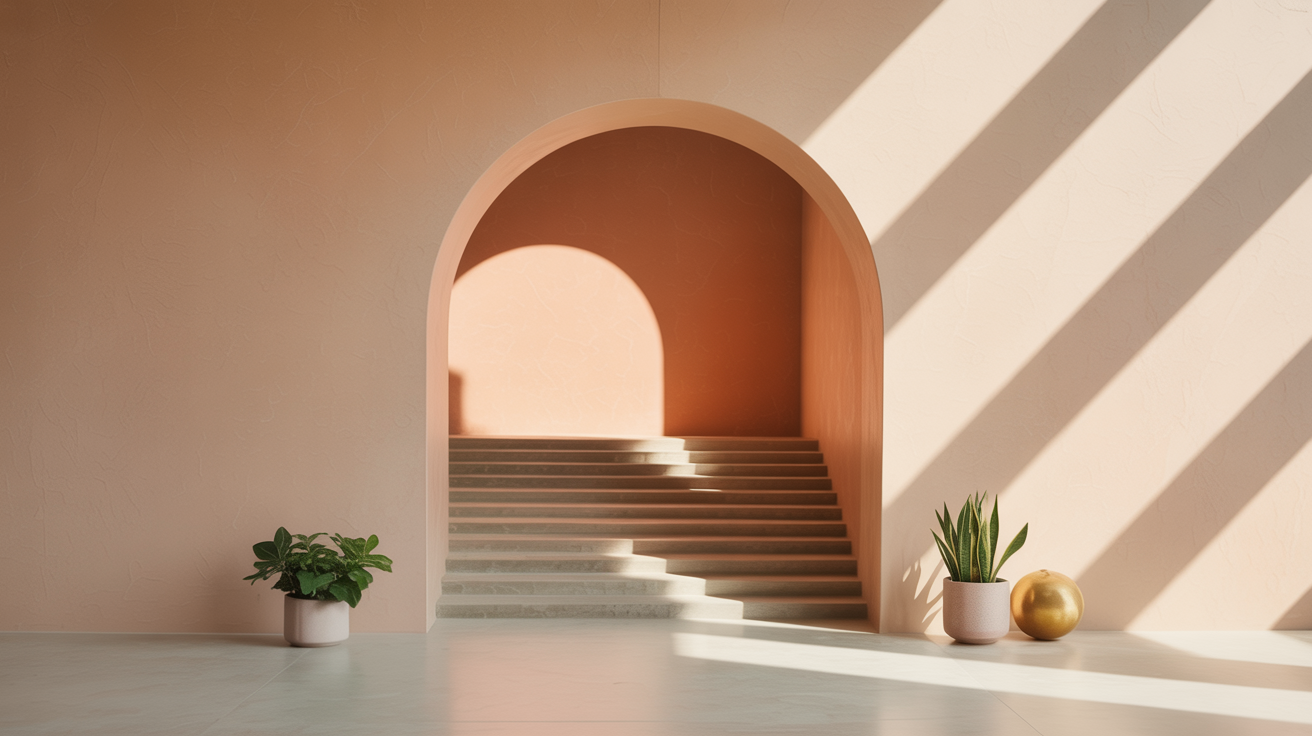
Most beginners fill the frame with their subject. That instinct makes sense. You came to photograph something, so you point the camera at it and get as close as you can. But some of the strongest photos work the other way around: they let the empty areas do the heavy lifting.
That emptiness has a name. It's called negative space, and understanding how it works will change the way you look through a viewfinder.
At a Glance
- Positive space is your subject. Negative space is everything around it, and it is not wasted, it is doing compositional work.
- Reliable places to find clean negative space: open sky, still water, fog, plain walls, and sand or snow.
- Pair negative space with the rule of thirds by placing your subject on a grid intersection and letting the emptiness fill the rest.
- Leave "lead room" in the direction your subject faces or moves, so the frame does not feel cramped.
- A moderate telephoto (85mm to 135mm full-frame equivalent) compresses and simplifies backgrounds, making clean negative space easier to find.
- Too much negative space reads as an empty photo; too little reads as clutter. The subject should stay the clear, immediate focal point either way.
What Positive and Negative Space Actually Mean
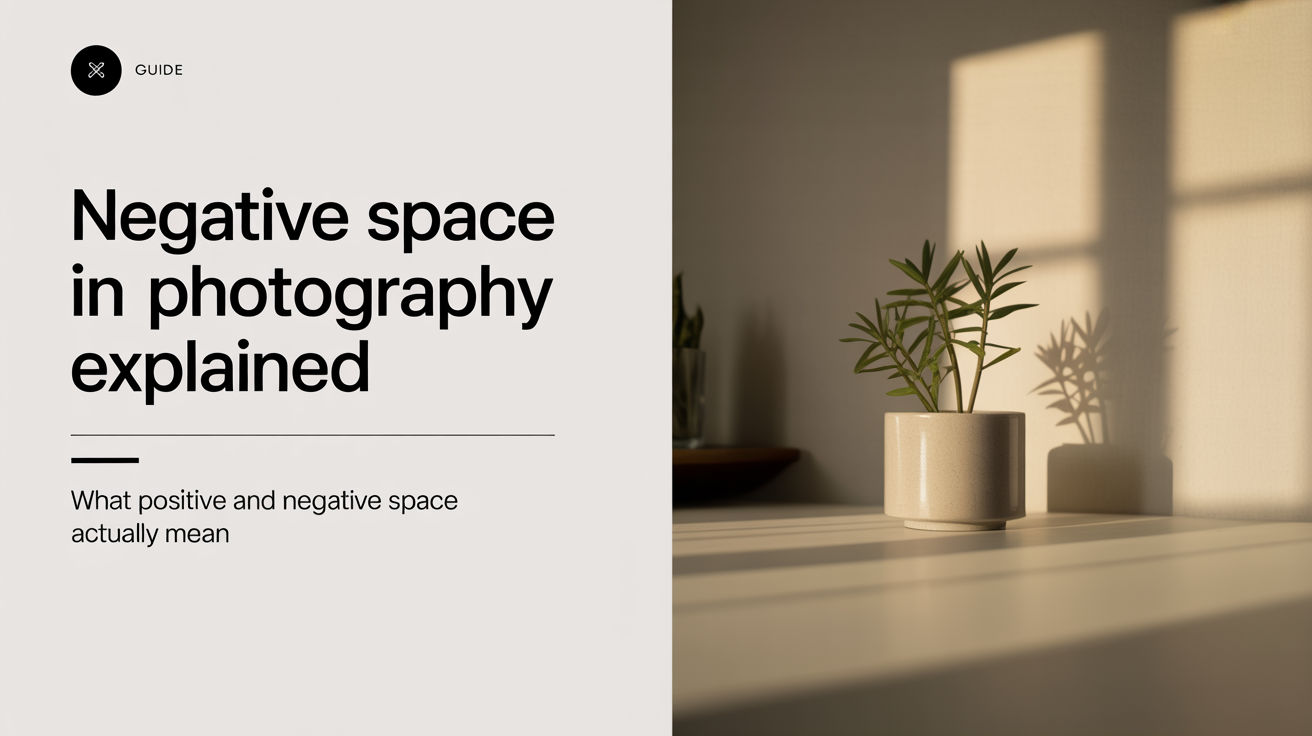
Every photo divides into two zones. The positive space is your main subject. A bird on a branch, a person on a street corner, a cup of coffee on a table. The negative space is everything around it: the sky above the bird, the plain wall behind the person, the smooth surface surrounding the cup.
Negative space is not wasted space. It gives your subject room to breathe. It tells the viewer where to look. And depending on how much of it you include, it can communicate mood, scale, and even emotion without a single word of explanation. This idea comes from visual art and design more broadly, where negative space is understood as the empty area around and between the subjects of a composition, used deliberately to improve balance and direct attention, not just as leftover background.
A tiny figure standing in the middle of a wide, foggy field feels lonely. A single flower against a vast blue sky feels peaceful and a little delicate. Strip away all that surrounding emptiness and you lose the feeling. The subject alone doesn't carry it. The relationship between subject and space does.
Think of it in rough proportions. A subject that fills 40 to 60 percent of the frame with a clean background around it tends to read as a fairly conventional, balanced composition. Push that down to 5 to 15 percent of the frame, and the negative space itself becomes the dominant visual element. Both can work; they just tell different stories, and the shift between them is a deliberate choice, not an accident of not getting close enough.
Where to Find Clean Negative Space
You don't need a studio or a special backdrop. Clean negative space is everywhere, as long as you know what to look for.
Here are five reliable places to find it:
- The sky. An overcast sky gives you a smooth, neutral backdrop. A clear blue sky is even simpler. Position your camera slightly low and angle upward to isolate a subject against it.
- Still water. A calm lake, a puddle, or the glassy surface of a harbor reflects light evenly and removes background clutter without any effort from you.
- Fog or mist. Fog dissolves distracting backgrounds naturally. Anything more than a few meters behind your subject disappears, leaving it crisp against a soft wash of grey.
- Plain walls and flat surfaces. Urban environments are full of single-color walls, tiled floors, and painted fences. A person standing against a white wall gets every visual advantage that a studio backdrop provides.
- Sand and snow. Both create wide, texture-free expanses that push the viewer's attention straight toward whatever you place in front of them.
The key with all of these is to look at the background before you look at the subject. Ask yourself whether there's visual noise competing with your focal point. If there is, move your position, change your angle, or wait. A useful habit: before you press the shutter, deliberately scan the four edges of the frame first, then the middle. Most distracting elements get caught along the edges, not the center, because that is where beginners check last.
How to Compose with Negative Space
Finding a clean background is step one. Placing your subject thoughtfully within that background is step two.
The most common mistake is putting the subject dead center with a wall of empty space behind it. That can work, but it often feels static. A more interesting approach is to pair negative space composition with the rule of thirds. Place your subject on or near one of the grid's intersecting points, then let the negative space occupy the remaining two-thirds (or more) of the frame. The result is a photo that feels balanced and intentional rather than accidental.
Direction matters too. If your subject is facing or moving toward one side of the frame, let the negative space extend in that direction. A runner facing right should have space on the right. A person staring into the distance should have emptiness in front of their gaze. This creates what photographers call "lead room." The space implies continuation. Without it, the subject feels cramped, as though it's about to walk into a wall.
You can also use negative space to establish scale. A single hiker at the bottom of the frame with an enormous mountain behind them tells you immediately how big that mountain is. No other technique communicates scale that efficiently.
Negative Space Placement: A Quick Reference
Different placements produce noticeably different moods, even with the same subject and the same clean background. Use this as a starting decision guide.
| Subject position | Negative space share | Typical feeling | Good for |
|---|---|---|---|
| Center of frame | Roughly even on all sides | Calm, formal, static | Portraits, product-style shots, symmetry |
| Off-center, on a rule-of-thirds point | About two-thirds of the frame | Balanced, intentional | Everyday portraits, landscapes, wildlife |
| Small in the frame, corner-weighted | 80 percent or more | Isolation, scale, quiet | Minimalism, lone figures, vast landscapes |
| Edge of frame, facing inward | Space concentrated on one side | Tension, implied motion | Sports, wildlife about to move, storytelling shots |
Pairing Negative Space with Other Composition Tools
Negative space doesn't have to work alone. It combines well with almost every other compositional approach.
Leading lines can guide the eye through an area of negative space toward the subject, making the emptiness feel purposeful rather than accidental. A road disappearing into fog, a fence stretching toward a lone tree, a reflection leading to a single boat. The line gives the viewer a path; the negative space gives the journey somewhere to land.
Natural frames work the same way. A doorway or window frames your subject, and the subject itself can be surrounded by negative space within that frame. You get two layers of intentional composition working together.
The point is that these tools reinforce each other. Once you start thinking compositionally about the relationship between your subject and the space around it, everything else falls into place more naturally.
A Few Things That Get in the Way
Using negative space well is mostly about removing things rather than adding them. Here are common traps to avoid.
Clutter at the edges. A mostly clean background ruined by a telephone pole creeping in from the corner is worse than a genuinely busy background. Your eye goes straight to the intrusion. Before you shoot, scan the entire frame, not just the center.
Busy light. Dappled sunlight creates patches across a wall or ground that interrupt what should read as a smooth surface. Flat, even light (overcast days or open shade) keeps your negative space genuinely quiet.
The wrong focal length. Wide angles tend to include more of the surrounding environment, which can work for negative space but also drags in more potential distractions. A moderate telephoto (something in the 85mm to 135mm range on a full frame body, or its equivalent) compresses the background and simplifies it, making clean negative space easier to achieve.
Centering everything. As mentioned above, a subject planted in the middle of a sea of emptiness can feel inert. Experiment with asymmetric placement. The discomfort of "too much empty space on one side" is often exactly what gives a photo its tension.
Ignoring color contrast. A well-placed subject can still get lost if its color is too close to the background's. A dark bird against a dark, overcast sky disappears more than the composition would suggest on paper. Check tonal and color contrast, not just spatial layout, before you commit to a frame.
Frequently Asked Questions
Does negative space have to be completely plain?
No. It just needs to be visually quieter than your subject. A lightly textured concrete wall still works as negative space if your subject is bold and well-lit. The goal is contrast between the subject and its surroundings, not perfect blankness.
Can I create negative space by editing a photo after the fact?
Sometimes. If you shoot with a little extra space around your subject, cropping and straightening can improve the composition. You can also use selective blurring (background blur or the blur tool in editing software) to calm down a slightly busy area. But it's easier to find or create clean space in the field than to manufacture it later.
Is negative space only for minimalist photography?
No. It shows up in portraits, landscapes, street photography, wildlife, and architecture. Any time you want to isolate a subject, create breathing room, or convey a particular mood, it's a useful approach. Minimalism just tends to make it especially visible because there's less else going on.
How do I know if I've used too much negative space?
The subject starts to feel lost or unimportant. If you have to search the frame to find the focal point, the balance has tipped too far. As a rule, your subject should read clearly and immediately, even with a lot of surrounding space. If it doesn't, try repositioning or cropping to shift the ratio slightly.
What if my subject is small and still dominant?
That's the goal. A small subject reading as dominant against a large, quiet background is exactly what good negative space composition achieves. Size is not the same as visual weight. A sharp, well-lit subject against a soft grey sky will hold the viewer's attention even if it occupies just five percent of the frame.
Does negative space work in vertical (portrait-orientation) photos?
Yes, and in some ways it works even better. Vertical frames, common for phone shots and social media, naturally concentrate the eye toward the top or bottom third. Placing a subject low in a vertical frame with open sky above it, or high in the frame with a long stretch of ground or water below, is one of the most reliable negative space compositions to reach for when shooting in portrait orientation.