Gear Guides
Essential Camera Accessories for Beginners
A practical guide to camera accessories for beginners: what to buy first, what can wait, and why each item matters for new photographers.
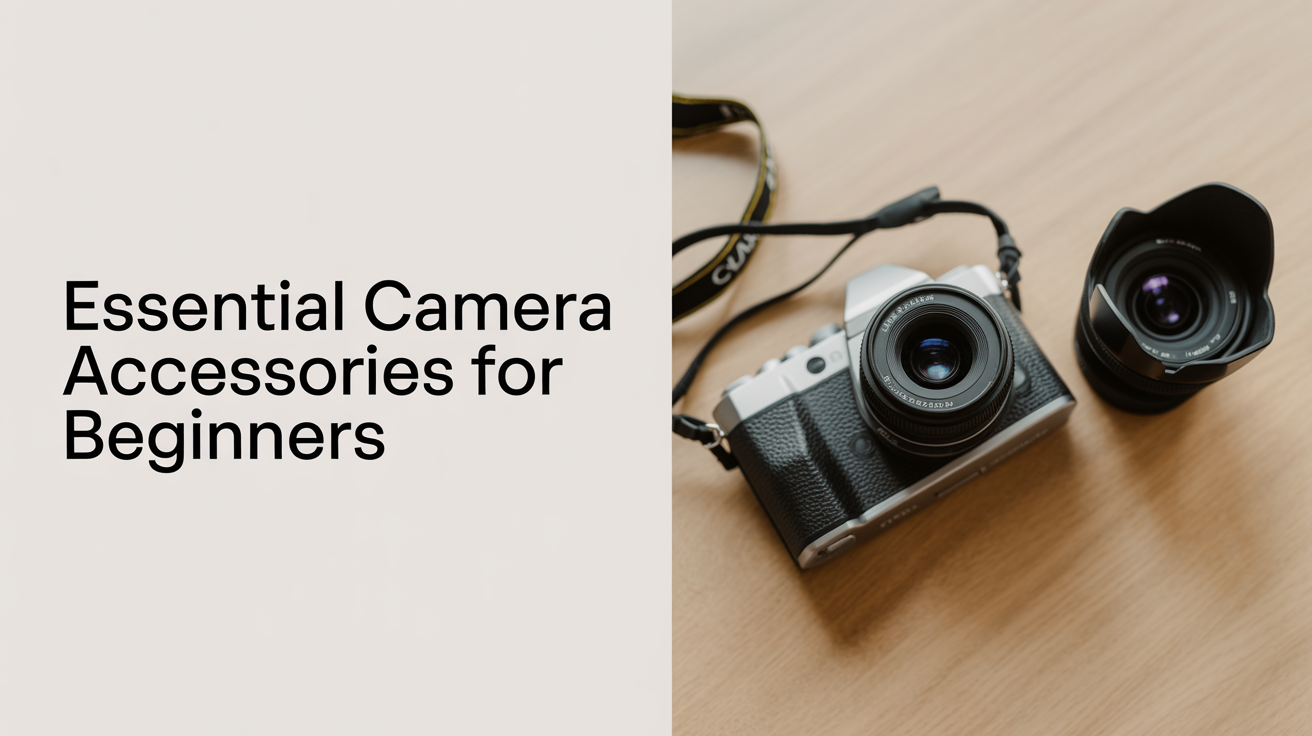
Your camera body is only the starting point. A few well-chosen accessories make shooting more comfortable, protect your investment, and save you from the frustration of running out of battery or storage at exactly the wrong moment. This guide covers the beginner photography gear that actually earns its place in your bag, organized so you know what to buy on day one and what can wait.
What Accessories Does a Beginner Actually Need?
The honest answer is: not many. A camera kit fresh from the box can produce real photographs. The accessories below solve specific, concrete problems: dead batteries, full memory cards, scratched lenses, and dropped cameras. Buy for the problems you will actually run into, not for every scenario you can imagine.
Before spending anything extra on gear, consider that time behind the camera builds skill faster than any accessory. The items on this list free you to focus on that.
If you are still deciding on a camera body, take a look at our guide to how to choose your first camera and the breakdown of DSLR vs mirrorless for beginners.
Get These First
These are the items that address real, immediate problems. Most beginner photographers need all four within the first few weeks.
Spare Battery (or Two)
The battery that ships with most cameras is sized to get you through a shoot, not through a full day of exploring with the camera. When the battery dies, you stop shooting.
A spare battery lets you keep going. It also means you can charge one battery while using the other, which matters when you are traveling or shooting somewhere without easy access to a power outlet.
Look for a battery that matches your exact camera model. Third-party batteries are significantly cheaper than the brand-name versions and work well for most uses; they tend to have slightly less capacity but are fine for general shooting. Buy at least one spare. Two spares give you real flexibility.
Memory Cards
Your camera needs a memory card to store photos, and the one card you received in the box (if you received one at all) is rarely enough.
A few things to understand about memory cards:
Format: Your camera will use one specific card format, usually SD or CFexpress. Check your manual before buying anything.
Speed class: Speed ratings describe how fast the card can write data. For beginners shooting photos, most current cards are more than fast enough. If you plan to shoot video, especially 4K, you will want to pay closer attention to the write speed on the packaging.
Capacity: A 64GB or 128GB card holds thousands of JPEG photos. If you shoot in RAW format, which produces larger files, you will fill cards faster. Starting with two cards is sensible; one to shoot on, one as a backup.
Avoid very cheap, no-name cards. Cards from established brands in the mid-price range are reliable and fast enough for nearly all beginner needs.
Camera Bag or Case
A bag protects your camera and makes it easier to carry everything you need. You do not need anything elaborate.
The options for beginners are simple: a small padded shoulder bag for everyday carry, a camera sling bag that keeps the camera accessible on one shoulder, or a padded insert that fits inside a regular backpack. All three work. The right choice depends on how you prefer to carry things and how much gear you are taking out at once.
At this stage, avoid large backpacks designed for professional photographers with multiple bodies and a dozen lenses. They are heavy and overkill for a single camera with one or two lenses.
Camera Strap
Most cameras ship with a basic neck strap. It works, but many photographers find it uncomfortable over time because the camera swings forward and can knock against things.
A few alternatives are worth knowing about:
Sling straps cross over one shoulder and hold the camera at your hip. They are comfortable for walking and keep the camera ready to shoot quickly.
Peak-style connectors are small clips that let you attach and detach your camera from a strap without threading or unthreading anything. They are popular with photographers who switch between carrying a camera and putting it down.
The strap that came with your camera is fine to start with. Replace it when it starts bothering you, not before.
Get These Later
These accessories solve real problems, but they are less urgent. Pick them up once you have spent enough time shooting to understand your own habits.
Cleaning Kit
Dust, fingerprints, and smudges end up on your lens eventually. A basic cleaning kit handles this without risking scratches.
A complete kit includes a lens pen or lens cleaning fluid with microfiber cloths, a blower for removing dust before wiping, and lens cleaning tissues. The blower is the most important piece: always use it first to remove loose particles before you put anything against the glass.
You do not need to clean your lens constantly, but having the kit available prevents you from using a shirt corner or a breath-and-wipe approach, which can scratch coatings over time.
Lens Hood
A lens hood is a cylindrical or petal-shaped piece of plastic that attaches to the front of your lens. Its job is to block light coming in from the sides, which reduces lens flare and can improve contrast in certain lighting conditions.
Many lenses include a hood in the box. If yours did, attach it and leave it on. If yours did not, the hood for your specific lens is worth buying but is not urgent.
Beyond reducing flare, a lens hood also provides some physical protection for the front element of the lens: a bump against a doorframe hits the hood rather than the glass.
Extra Lens
Once you have spent a few months shooting with your kit lens, you will have a clearer sense of what focal length you reach for most. That clarity is worth waiting for before spending money on additional glass.
A 50mm prime lens is a popular first addition for many beginners. It tends to be affordable, has a wide maximum aperture for shooting in lower light, and produces a look that is different enough from a kit zoom to feel like a genuinely new tool. We have a full explanation in the nifty fifty guide.
Tripod
A tripod is useful in specific situations: low-light photography, self-portraits, long exposures, and video. If none of those apply to your shooting right now, a tripod can wait.
When you do buy one, look for a tripod that is stable at full height, has a head that is easy to adjust (ball heads are popular and quick to use), and is light enough that you will actually carry it. An unstable tripod or one that stays in the closet because it is too heavy to bother with is money wasted.
A Note on Spending
New photographers are often told they need a lot of gear. They usually do not. The cameras sold today, even entry-level models, can produce excellent photographs. The limiting factor for most beginners is understanding light and exposure, not equipment.
The four items in the "get these first" section cost less combined than most camera accessories you will see marketed to beginners. They solve real problems. Everything else can wait until you have a specific need for it.
Frequently Asked Questions
Do I need a UV filter to protect my lens?
UV filters are often sold as essential lens protection, but they are optional. A quality UV filter from a reputable brand does no real harm and may protect the front element in some situations. Cheap filters, on the other hand, can slightly reduce image quality, especially in backlit situations. If you want the protection, buy a filter that matches your lens diameter from a known brand. If you skip it, a lens hood offers similar physical protection against bumps without affecting image quality.
How many memory cards do I need?
Two cards is a good starting point for most beginners: one in the camera, one in your bag. The more you shoot, the more you will calibrate to your own needs. Photographers who shoot video, or who go on long trips without reliable access to a computer, tend to carry more. For casual photography, two 64GB cards will last a long time.
Is it worth buying brand-name batteries or are third-party ones fine?
Third-party batteries work well for the vast majority of uses. They are cheaper, typically have 80-90% of the capacity of the brand-name version, and are safe when purchased from a reputable seller. Some cameras display a low-battery warning when a third-party battery is inserted, even at full charge; this is the camera's way of detecting a non-OEM cell, not an indication that the battery is faulty. If that warning bothers you, or if you are shooting professionally where a battery failure would be costly, the brand-name option is worth the extra cost.
What bag is best for a beginner?
The best camera bag is one you will actually use. For most beginners with one camera body and one or two lenses, a small padded shoulder bag or a sling bag is more practical than a large backpack. Think about how you typically carry things day-to-day and choose something that fits those habits.
Do I need a cleaning kit right away?
Not on day one, but within the first few months. A lens pen and a blower cover most cleaning needs and together cost very little. The risk without any cleaning supplies is not immediate damage, but gradual scratching from improvised cleaning methods over time.