Gear Guides
Do You Need a Tripod? A Beginner's Guide
Find out when a tripod actually helps, what to look for when buying one, and how to choose the right type for beginner photography.
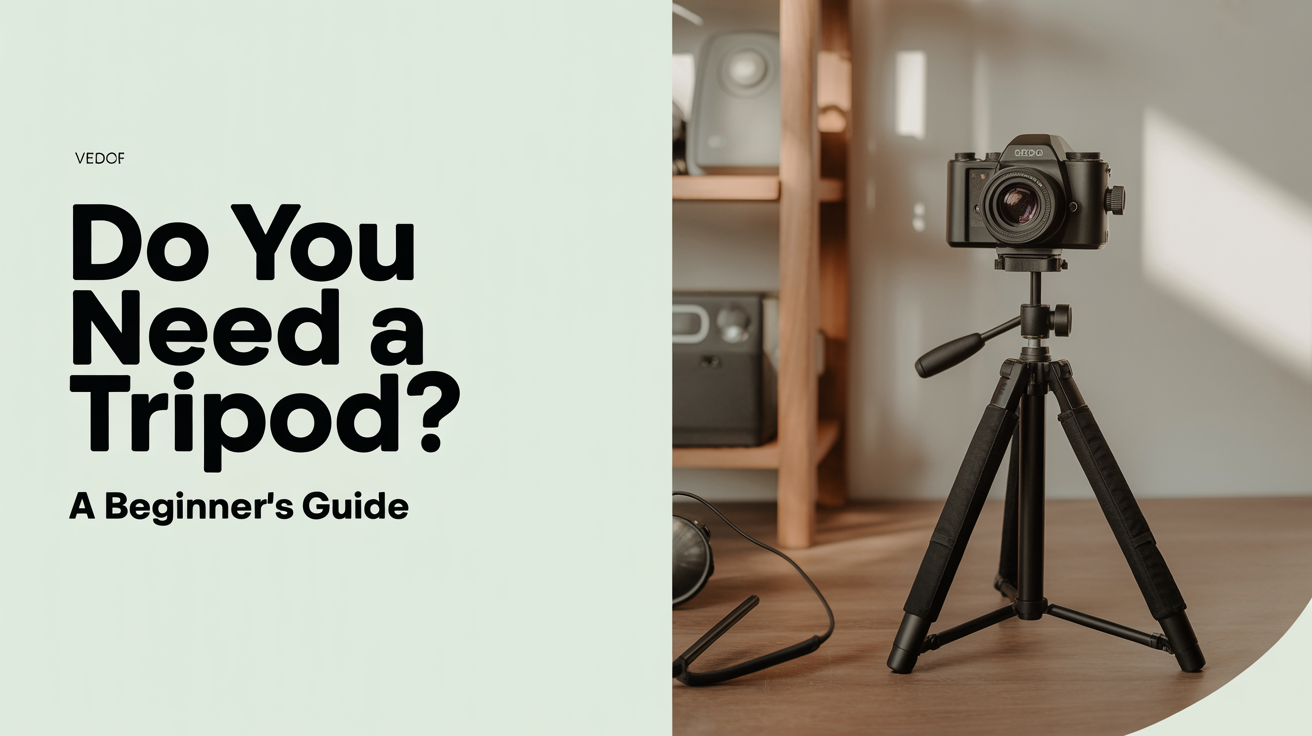
Short answer: not always, but there are specific situations where a tripod goes from optional to essential. This guide walks through when a tripod genuinely helps, what the jargon means, and how to pick one without overspending.
When a Tripod Actually Makes a Difference
A camera held in your hands will always have a tiny amount of movement in it. Most of the time your shutter speed is fast enough that the camera captures the scene before that movement shows up. But in certain situations, even the slightest shake blurs the shot.
Low-light photography. When there is not enough light, your camera needs more time with the shutter open to collect enough of it. A shutter speed of 1/30 second or slower is hard to hold steady by hand. Indoors at night, in a dim cafe, or shooting under forest canopy at midday: these are the moments when a tripod keeps your image sharp.
Landscapes and long exposures. If you want silky water, light trails from cars, or a star-trail image, you need exposures measured in seconds or minutes. A tripod is not optional here; it is the only way to get the shot.
Self-portraits and group photos. When you want to be in the frame, you need somewhere to put the camera. A tripod solves this immediately.
Video. Handheld video tends to look shaky and amateur. A tripod gives you a locked-off, professional-looking frame.
For fast action in good light, like a sports game on a sunny afternoon, a tripod often gets in the way more than it helps. You will move around more than the tripod can keep up with, and your shutter speed is already fast enough to freeze motion without one.
If you are still figuring out how to choose your first camera, the short version is: get your camera sorted first, then consider a tripod as a second purchase once you have a feel for what you are shooting.
What the Jargon Means
Tripod specs can be confusing the first time you read them. Here are the terms that come up most often.
Ball head vs. pan head. These describe the mechanism that connects the tripod legs to your camera.
A ball head has a single ball-and-socket joint. You loosen one knob, position the camera wherever you want it in three dimensions, and tighten the knob again. It is fast and flexible. Most photographers use ball heads for still photography.
A pan head (also called a two-way or three-way head) has separate adjustment handles for each axis: one to tilt up and down, one to pan left and right, and sometimes one to roll the camera sideways. It is slower to adjust but more precise. Pan heads are common for video work where you want smooth, controlled movements.
Some entry-level tripods come with a head built in. Others sell the legs and head separately. Buying them separately gives you more flexibility, though it does add to the cost.
Load capacity. This is the maximum weight the tripod is rated to hold safely. Your camera body plus your heaviest lens should come in well under this number. A small mirrorless camera with a kit lens might weigh around 600 grams. A DSLR with a telephoto lens could weigh 1.5 kg or more. Check the combined weight before you buy. If you are curious about the difference between DSLRs and mirrorless cameras, that guide covers the weight differences too.
Maximum height / minimum height. Maximum height tells you how tall the tripod stands at full extension. Minimum height matters if you want to shoot low to the ground, such as for macro or nature photography where you are getting close to flowers or insects.
Center column. Most tripods have a center column that can be raised for extra height. Raising it reduces stability compared to spreading the legs. Some columns can be repositioned horizontally, which is useful for shooting straight down.
What to Look for When Buying
Here is a practical checklist to work through before committing to a tripod.
Leg material. Aluminum is the most common material at lower price points. It is affordable and sturdy but heavier to carry. Carbon fiber is significantly lighter and also absorbs vibration better, but costs more. For most beginners, aluminum is a sensible starting point.
Leg locks. Legs extend and lock in two main ways: twist locks (you rotate a section to tighten it) and flip locks (a lever snaps into place). Neither is obviously better; it comes down to preference. Flip locks are often easier to operate with gloves on.
Number of leg sections. Three-section legs pack down longer than four-section legs but extend faster. Four-section legs pack more compactly into a bag, which matters if you are traveling.
Weight. If you are carrying the tripod on long hikes, weight adds up quickly. A 2 kg tripod does not sound heavy until you have had it on your back for three hours.
Head type. As covered above: ball head for general photography, pan head for video, or a fluid-damped head if smooth video pans are a priority.
Price range for beginners. A functional beginner tripod sits roughly in the 40 to 100 range (USD or GBP equivalent). Below that you start to find very wobbly legs and plastic locking mechanisms that fail quickly. Above that, you are getting into prosumer territory that most beginners do not need yet.
A 50mm lens paired with a decent entry-level tripod covers a huge range of beginner shooting scenarios: portraits indoors, landscapes at golden hour, product shots on a table.
Alternatives to a Full Tripod
A full-size tripod is not always the right tool, especially when weight or pack size is a constraint.
Travel tripods. These fold down much smaller than a standard tripod and often weigh under 1 kg. Trade-offs include lower maximum height and sometimes reduced stability in windy conditions.
Tabletop tripods. Very small, designed to sit on a surface like a table or a wall. Useful for video calls, product photography, or scenes where you need the camera just a few inches off the ground. Not a substitute for a full tripod but a handy second option.
Gorillapods / flexible tripods. These have flexible legs that wrap around poles, railings, or tree branches. Quirky but genuinely useful for travel and content creation in tight spaces.
A monopod. One leg instead of three. It does not lock the camera in place the way a tripod does, but it significantly reduces shake and is much faster to set up and move around with. Sports and wildlife photographers use them often.
Frequently Asked Questions
Do I need a tripod as a complete beginner? Not immediately. If you are still learning the basics of exposure and composition, a tripod is a secondary concern. Once you find yourself shooting in low light, wanting long exposures, or needing to appear in your own photos, that is a good signal to add one.
Can I use any tripod with any camera? Most cameras use a standard quarter-inch screw mount at the bottom of the body, which is compatible with virtually all tripod heads. There are some larger format cameras and video rigs that use a different mounting system, but for consumer cameras you are almost always safe.
How heavy a tripod do I need? Match the load capacity to your gear. A tripod rated to 5 kg is more than enough for a typical beginner kit. If you have a very small mirrorless camera, a lighter tripod designed for compact cameras will work. If you plan to add bigger lenses over time, it is worth buying a tripod with a higher load rating from the start.
Is a more expensive tripod always better? Not necessarily for beginners. A mid-range tripod in the 60 to 100 range from a reputable brand will serve most beginner needs well. The main gains at higher price points are weight reduction (carbon fiber), smoother head movements, and better long-term durability. Those things matter more once you know you will be using a tripod regularly.
What is the difference between a fluid head and a ball head? A fluid head uses a damped mechanism to create smooth, consistent pans and tilts. It is specifically designed for video. A ball head is faster and more flexible for still photography but does not produce the controlled movement a fluid head does when you are panning the camera during a shot. If you plan to shoot a mix of stills and video, a ball head with a separate video head is more practical than trying to use one head for both.