Photo Genres
Macro Photography for Beginners
Learn macro photography for beginners: gear options, settings, focusing tricks, and tips for shooting flowers, insects, and more up close.
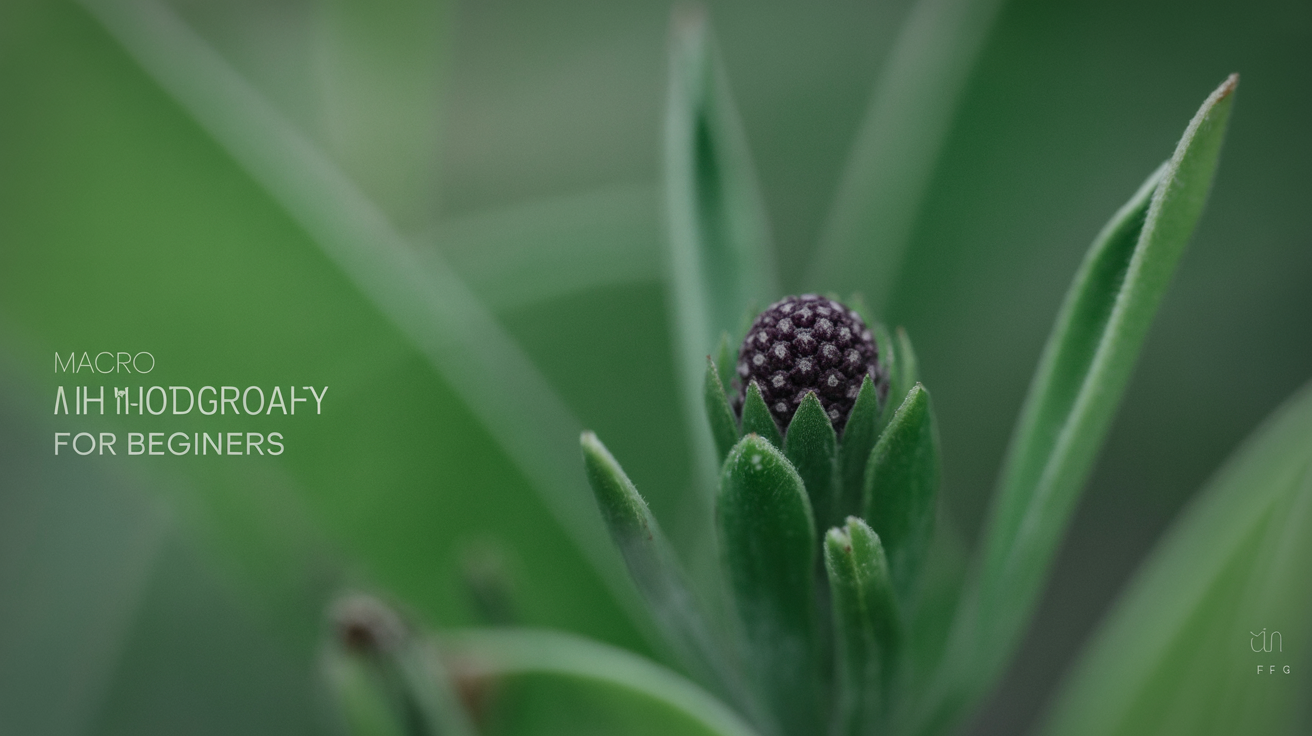
Macro photography is close-up photography taken at extreme proximity, where the subject appears life-size or larger on the camera sensor. A true macro lens delivers a 1:1 magnification ratio, meaning a 10mm subject fills 10mm of the sensor. The result is a world most people walk right past: a raindrop balanced on a leaf, the geometry of a bee's wing, the texture of a peach skin. You do not need expensive gear to get started, but you do need to understand a handful of settings that behave differently at close range.
Why Close-Up Photography Plays by Different Rules
Move your camera within centimetres of a subject and two things happen immediately. First, the depth of field collapses. At macro distances, even a narrow aperture like f/8 gives you only a few millimetres of sharp focus. Second, autofocus struggles. The system hunts back and forth because small focus movements produce large image changes, and it loses confidence quickly.
Both problems are solvable once you understand them.
Depth of field and aperture. Your instinct might be to open the aperture wide to let in more light. Resist that. At 1:1 magnification, f/2.8 gives you a depth of field measured in fractions of a millimetre. For most macro subjects, aim for f/8 to f/16. Yes, this makes the image darker, but a slower shutter speed, a ring flash, or a macro-friendly LED panel brings back the exposure. The trade-off is worth it.
Focusing by rocking. Rather than turning the focus ring while watching the lens hunt, try this: set the focus ring to your target distance (say, 1:1 on a dedicated macro lens), then gently rock your body toward and away from the subject. Watch the viewfinder or screen. When the element you care about snaps into focus, press the shutter. It sounds crude but it is accurate and fast once you practice it. Manual focus is your friend here. This technique also connects you to the subject in a way that autofocus never quite does.
Camera shake is magnified. A handshake that is invisible at normal distances becomes a blur at macro scale. A tripod is not optional for technically sharp shots. Use a remote shutter release or the camera's two-second self-timer to remove the vibration from pressing the button. Mirror lock-up (if your camera has it) eliminates the last source of internal vibration.
Gear Options for Getting Started
You do not need to buy a dedicated macro lens on day one. Here are the realistic options, roughly in order of cost.
| Option | Magnification | Cost | Notes |
|---|---|---|---|
| Close-up filter (diopter) | Varies, up to ~0.5x | Low | Screws onto any lens, no exposure penalty |
| Extension tubes | Up to ~1:1 depending on combo | Low-medium | No glass, so no optical quality loss; you lose infinity focus |
| Reversing ring | Up to ~5:1 with a 50mm lens | Very low | Mounts the lens backwards; manual only, no autofocus |
| Dedicated macro lens | 1:1 | Medium-high | Sharpest, most convenient, doubles as a portrait lens |
A 90mm to 105mm macro lens is the classic choice because it gives you working distance, meaning you are far enough from your subject that you do not shadow it or startle an insect. A 50mm macro works fine for non-living subjects like textures or water drops.
If budget is the constraint, start with extension tubes on whatever 50mm or kit lens you already own. The image quality is genuinely good, and they teach you exactly how magnification and depth of field interact.
Practical Macro Photography Tips for Your First Shoots
These are the habits that separate consistently sharp macro images from the frustrated pile of soft ones most beginners start with.
- Shoot in calm air. Wind moves flowers enough to ruin macro shots. Early morning, before the breeze picks up, is the classic window. Bonus: dew and soft light.
- Use a tripod, always. Even with image stabilization, handheld macro is a gamble at slow shutter speeds. A flexible gorilla-style tripod lets you get low.
- Set aperture first. Pick f/8 to f/11 as your starting point. Adjust shutter speed and ISO around that.
- Diffuse your light. Direct flash or harsh sun creates ugly specular highlights on reflective subjects like beetle shells or water drops. A white foam diffuser over a small LED panel, or a reflector card, softens everything. A ring flash built for macro gives even, shadow-free light.
- Use the two-second timer or a remote. Pressing the shutter button at macro distances introduces visible blur. Both options cost nothing.
- Shoot RAW. You will want to recover shadow detail under a diffuser or push sharpening slightly. RAW gives you that latitude.
- Focus on the eyes. For insects and spiders, the compound eye is what the viewer looks for first. If only one element can be sharp, make it that.
- Take many frames. Rocking focus is a probability game. Shoot five frames of each position and keep the best.
Subjects Worth Exploring
Flowers are the obvious starting point, and they are forgiving because they stay still. Look at stamens, petal veins, or the texture where two petals overlap. After flowers, try water drops on a leaf after rain, the surface of fruit, coins, fabric weave, or mechanical parts like watch gears. Insects require patience and early-morning timing when they are cool and slow. Focus stacking software (covered below) is almost essential for insects because their bodies are three-dimensional.
Close-up photography of everyday textures, rust, bark, or woven cloth, is underrated as a learning exercise. No wind, no blinking subject, and the results often look abstract and striking.
Focus Stacking: The Next Step
When depth of field is simply too thin to capture the whole subject in one frame, focus stacking combines multiple images taken at slightly different focus distances into one sharp composite. You shoot a sequence (sometimes 10 to 30 frames) rocking through the subject, then software like Helicon Focus, Zerene Stacker, or Photoshop's built-in stack function aligns and blends them.
Focus stacking is not something you need to learn on your first outing, but it is worth knowing the term. When you look at a macro photo of a full insect, perfectly sharp from antenna to wingtip, that image was almost certainly stacked.
Macro photography rewards slowing down more than almost any other genre. Where portrait photography is about connection with a person and landscape photography is about the scale of a scene, macro is about finding the extraordinary inside the small and easy-to-overlook. It is a useful counterpoint even to something as outward-looking as street photography, because it trains your eye to see detail rather than movement.
Start with a flower, a tripod, f/11, manual focus, and the rocking technique. Everything else builds from there.
Frequently Asked Questions
Do I need a dedicated macro lens to do macro photography?
No. Extension tubes mounted on a standard 50mm lens are a genuine alternative and produce sharp results at low cost. Close-up filters are even cheaper. A dedicated macro lens is the most convenient option, but it is not a requirement for learning.
What aperture should I use for macro photography?
Start at f/8 to f/11. This gives you a workable depth of field without diffraction softening (which appears above roughly f/16 on most cameras). Wide apertures like f/2.8 produce razor-thin focus planes that are hard to control at macro distances.
Why does my autofocus fail at close range?
At macro distances, tiny physical movements cause large changes in the focus plane. Most autofocus systems are designed to lock onto subjects at normal distances and they lose confidence when they cannot find clear contrast at such proximity. Manual focus, combined with the body-rocking technique described above, is more reliable and faster once you practice it.
What is a 1:1 magnification ratio?
It means the subject is reproduced on the sensor at its actual size. A 20mm-wide flower would fill 20mm of the sensor. True macro lenses reach 1:1 or beyond. A standard 50mm lens without tubes typically tops out around 1:5 or 1:7, which is close but not technically macro.
How do I stop blur when shooting macro handheld?
Camera shake is amplified at macro distances. Use a tripod, set the shutter to the two-second self-timer, or use a remote shutter release. If you must shoot handheld, use flash to freeze motion and keep shutter speed above 1/200s. Raise ISO if needed; modern sensors handle high ISO better than blur.