Photo Genres
How to Take Better Candid Photos of People
Learn practical candid photography tips to capture natural, unposed moments of people with the right settings, timing, and approach.
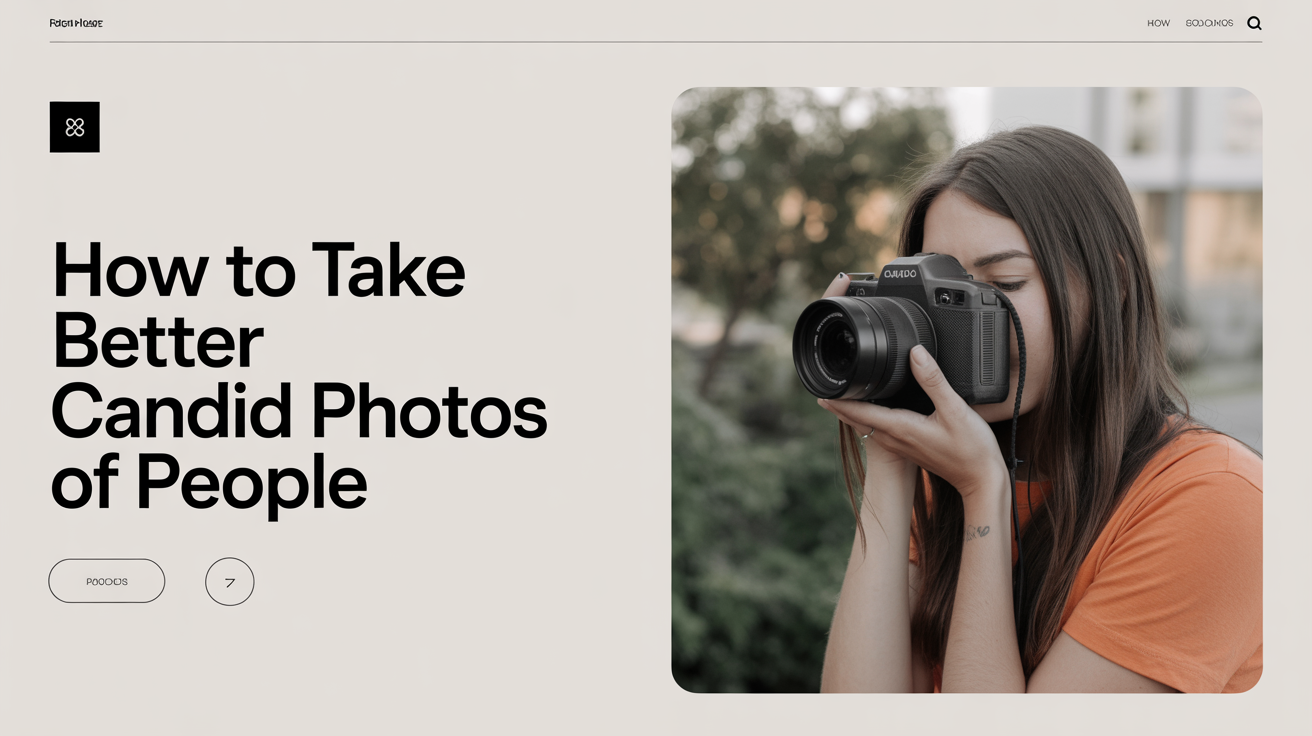
Candid photography is about capturing people when they are not performing for the camera. The moment someone notices you're shooting, you lose that naturalness. The goal is to be ready before the moment happens, move quietly, and stay in the background long enough that people forget you're there.
This guide walks you through the settings, habits, and etiquette that make candid photos work.
What Makes a Photo Feel Candid
A candid photo does not mean a blurry, poorly exposed snapshot. It means the subject is not posing or reacting to the camera. The best candid shots have the same qualities as any good photo: sharp focus on the subject, clean exposure, and a clear moment worth keeping.
What separates candid work from portrait work is timing and approach. You are not directing anyone. You are waiting, watching, and pressing the shutter at the right fraction of a second.
Two things help most:
- Blend in. A massive camera with a long white lens makes people self-conscious. A smaller camera, a 35mm or 50mm prime lens, and ordinary clothes make you far less noticeable.
- Shoot more than you think you need. Out of 30 frames, 2 or 3 might be keepers. That is normal.
Camera Settings for Candid Photography
Getting your settings right before you arrive on location gives you the bandwidth to focus on people, not on dials.
Shutter Speed
Use a shutter speed fast enough to freeze motion. People move, laugh, gesture, and turn their heads. A shutter speed of 1/250s is a reasonable starting floor for people standing or walking slowly. If children are running or the scene is energetic, go to 1/500s or faster.
Aperture
A wider aperture (lower f-number like f/2.8 or f/1.8) does two things: it lets in more light so you can keep that fast shutter speed, and it blurs the background so your subject stands out from the scene. This background blur is called bokeh. For group candids where you want more than one person sharp, step back to f/4 or f/5.6.
ISO
In good outdoor light, ISO 400 or lower keeps your images clean. Indoors or in shade, you may need ISO 800 to 3200. Modern cameras handle high ISO better than cameras from five years ago, so test your specific camera and see where noise becomes a problem.
Autofocus Mode
Use continuous autofocus (often labeled AF-C on Sony/Fujifilm/Nikon, or AI Servo on Canon). This mode keeps adjusting focus as your subject moves, which is critical when someone is walking toward you or turning their head.
Burst Mode
Burst mode (also called continuous shooting) fires multiple frames per second while you hold the shutter button. This increases your odds of catching the exact peak expression or gesture. Most cameras have a low and high burst option. Low burst at 3 to 5 frames per second is plenty for candid work without filling your memory card in seconds.
Settings Cheat Sheet
| Setting | Starting Value |
|---|---|
| Shutter speed | 1/250s or faster |
| Aperture | f/1.8 to f/4 (depending on depth of field) |
| ISO | 400 outdoors / 800-3200 indoors |
| Autofocus | Continuous (AF-C / AI Servo) |
| Drive mode | Low burst (3-5 fps) |
How to Take Candid Photos Step by Step
-
Arrive early and let people settle. If you show up to a family gathering or street market with your camera out immediately, everyone is on guard. Give it 15-20 minutes. Move around. People start to ignore you.
-
Pre-focus on a zone. Pick a spot where something interesting is likely to happen, focus on an object at that distance, then wait. This technique is called prefocusing. When your subject steps into that zone, you do not need to wait for autofocus to hunt.
-
Use a moderate focal length. A 35mm or 50mm lens on most cameras lets you stay close enough to fill the frame with one or two people without being right in their face. A very wide lens (like 24mm) forces you uncomfortably close. A long telephoto (like 200mm) keeps you far away but can feel intrusive if people notice you pointing a big lens from across the room.
-
Shoot from the hip occasionally. Holding the camera at waist height and shooting without looking through the viewfinder gives you a different angle and draws zero attention. Most of these shots will be duds, but occasionally you will get something genuinely interesting.
-
Watch for anticipatory moments. You can often predict when something is about to happen: someone is laughing at a story mid-sentence, a child is about to run toward a dog, two people are about to embrace. Start shooting slightly before the peak moment, because burst mode will catch it even if your timing is slightly off.
-
Review and delete fast. After a session, cull ruthlessly. Keep only the frames where expression, focus, and light all work together.
Being Respectful and Reading the Room
Candid photography is not a license to photograph anyone in any context without thought.
Public spaces. In most public places it is legal to photograph people you can see from a public street or park. That said, legal and considerate are different things. A person in visible distress, someone who has clearly noticed you and looks uncomfortable, or a private moment that someone would reasonably expect to be private are all situations to step back from.
Private events. At a wedding, birthday party, or family gathering, you typically have implicit permission to photograph attendees. Still, pay attention to whether anyone seems uncomfortable with the camera. If someone signals they do not want to be photographed, respect that without making a scene about it.
Children. Be especially careful with photos of children who are not your own, particularly if you plan to post online. At public events, a general photograph of a crowd that includes children is different from singling out a child for a portrait.
Offer to share. At local events or community gatherings, offering to send someone their photo builds goodwill and often makes people more relaxed around you for the rest of the shoot.
The best candid photographers are not invisible ninjas. They are people who have built a reputation for being respectful and fun to be around, so subjects genuinely stop worrying about the camera.
Common Mistakes and How to Fix Them
Blurry photos. Usually caused by a shutter speed that is too slow. Check that your shutter speed is at 1/250s or faster before you start shooting in a new location.
Subject looking directly at the camera and posing. This means you have been spotted. Either work with it (shift to a quick portrait session) or step away and let the moment pass. Move to a different spot in the room.
Missed moments. Turn on burst mode and keep your camera at eye level, not in your bag or pocket. The best moments happen without warning.
Flat, busy backgrounds. Use a wider aperture to blur the background, or reposition so your subject is in front of something simple (a wall, open sky, a patch of grass).
For more on working with people in front of your camera, the guide on portrait photography for beginners covers how to direct and light subjects when you do want them to pose. If you are taking your camera outdoors to capture landscapes and atmosphere alongside people, landscape photography for beginners is a good pairing. And if you are drawn to the energy of cities and public spaces, street photography for beginners goes deeper into working in urban environments.
Frequently Asked Questions
Do I need a special lens for candid photography? No. A 35mm or 50mm prime lens works well because both focal lengths are close to how the human eye sees, which makes framing feel natural. Kit zoom lenses in the 24-70mm range also work fine. What matters more than focal length is keeping your settings dialed in so you can react quickly.
Is it rude to take photos of strangers without asking? It depends on context. In public spaces, photographing people in everyday situations is generally accepted and legally permitted in most countries. Using judgment about context, not singling out individuals who seem uncomfortable, and being willing to delete a photo if someone asks you to are all part of shooting ethically.
My candid photos always look blurry. What am I doing wrong? The most common cause is a shutter speed that is too slow for moving subjects. Try 1/500s if you have been shooting at 1/125s or slower. Also make sure your autofocus is set to continuous mode, not single-shot mode, so it tracks movement rather than locking once and stopping.
How do I get people to stop noticing my camera? Time and familiarity. Stay in a location for a while. Be friendly and conversational with people around you. Keep the camera at your side or in your lap rather than always raised to your eye. People habituate to a camera fairly quickly if you are not constantly thrusting it at them.
Should I shoot in RAW or JPEG for candid work? RAW files give you more flexibility to fix exposure and white balance after the fact, which is useful when lighting changes quickly (like moving from shade to sun). JPEG produces smaller files and requires less editing time. For beginners who are not yet comfortable editing RAW files, JPEG is a perfectly fine starting point.